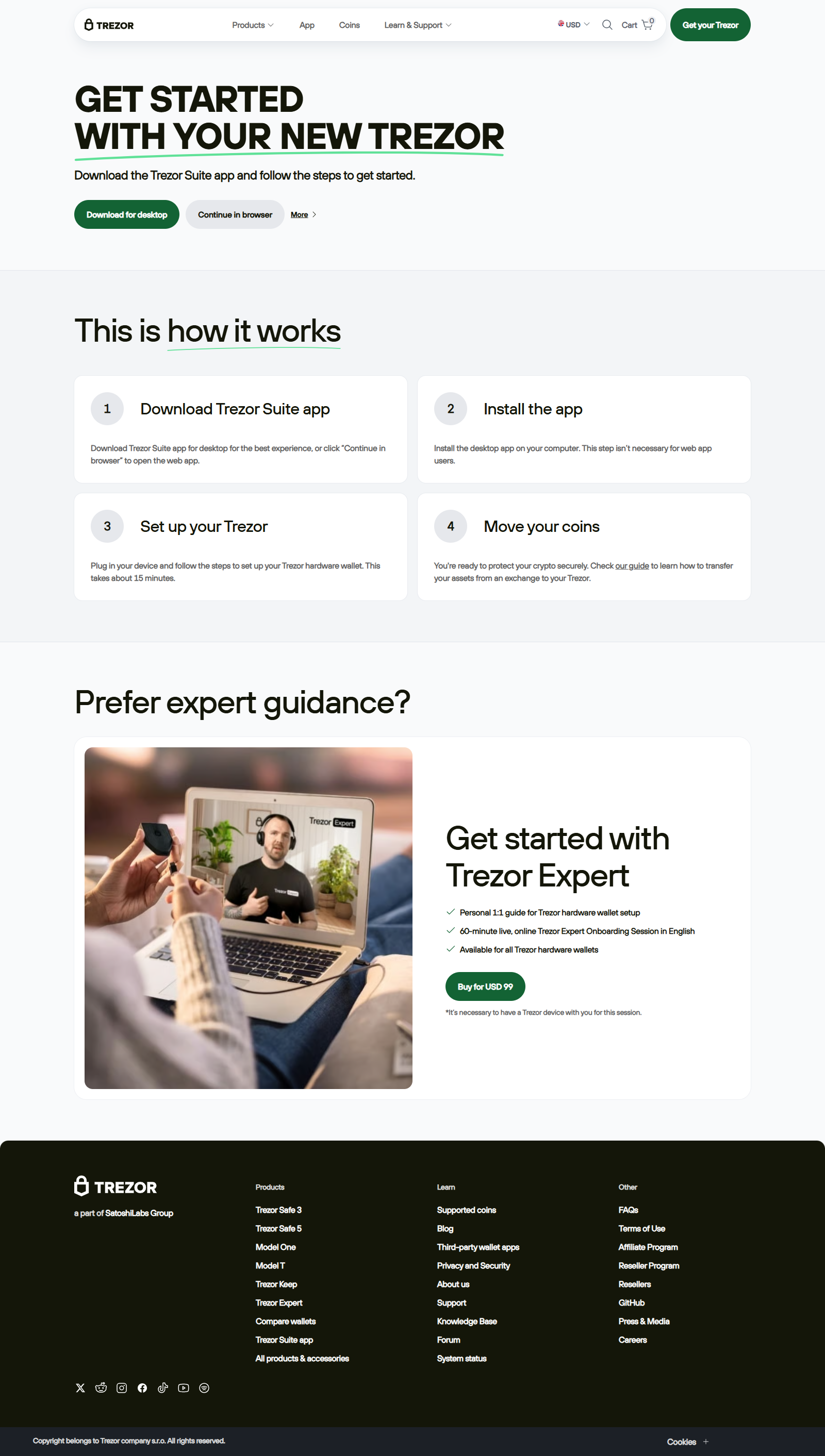
Trezor Suite – Easy Guide to Setting Up and Managing Your Wallet
A hardware wallet provides a dedicated way to manage digital assets while keeping important authorization steps connected to a physical device. Trezor Suite complements compatible Trezor hardware wallets by providing a convenient interface for viewing supported accounts, checking activity, and accessing available wallet features.
For users who are new to hardware wallets, learning the basics of Trezor Suite can make the setup process less confusing. A simple workflow, combined with good security habits, can help create a more reliable experience.
What Can You Do With Trezor Suite?
Trezor Suite is designed to work with compatible Trezor hardware wallets and provide access to supported cryptocurrency-management functions.
Through the application, users can generally work with supported accounts and review information such as balances and transaction activity. Depending on the device and current software capabilities, additional wallet features may also be available.
The software and physical wallet have complementary roles. Trezor Suite provides the interface, while the hardware device can be used to confirm supported sensitive operations.
Prepare Before You Begin
Before using Trezor Suite, choose a computer you trust. Avoid configuring your hardware wallet on a public computer or a device with unknown applications installed.
Make sure your operating system has appropriate security updates and use a reliable internet connection.
You should also be careful about where you obtain wallet software. Avoid unofficial download pages, suspicious advertisements, unexpected messages, and links from unknown accounts.
A fake wallet application may imitate a legitimate interface, making source verification an important part of the setup process.
Installing and Connecting Trezor Suite
After obtaining the appropriate software from a trusted source, open Trezor Suite and follow the setup instructions.
Connect your compatible Trezor hardware wallet according to the instructions provided. Read each prompt carefully and pay attention to information displayed on the physical device.
When the hardware wallet asks you to confirm an action, review the details before approving it. If anything looks unexpected, stop rather than continuing automatically.
Understanding Your Wallet Dashboard
Once setup is complete, the application can provide a central location for supported account information.
Depending on your configuration, you may be able to review:
Supported cryptocurrency balances
Transaction history
Account activity
Receiving addresses
Available wallet features
Device-related information
Using a dedicated interface can make routine wallet management easier to organize.
Sending Cryptocurrency With Care
Before sending cryptocurrency, verify that you have selected the correct account and entered the intended transaction information.
Carefully review the recipient address, amount, network, and other available details. Before confirming the transaction, compare the information with what appears on your physical Trezor device.
If the information shown on the device differs from your intended transaction, do not approve it.
Blockchain transactions may be irreversible, so checking the details before authorization is an important security habit.
Receiving Digital Assets
Receiving cryptocurrency is another task that requires careful verification.
Select the correct supported account and review the receiving address before sharing it. Confirm that the sender is using the appropriate asset and compatible network.
Avoid relying on addresses copied from suspicious messages or unfamiliar websites. For significant transfers, verify the information carefully before the transaction is initiated.
Keep Your Recovery Seed Private
Your recovery seed is extremely sensitive information and should always be protected.
Store your recovery information securely according to the instructions provided with your hardware wallet. Avoid saving it digitally in screenshots, cloud documents, email accounts, or messaging applications.
Never give your recovery seed to another person.
Be especially cautious if someone claims to be technical support and asks for your seed to repair, verify, synchronize, or recover your wallet. Treat such requests as suspicious.
Avoid Phishing and Fake Support
Fraudsters can create convincing websites and support accounts that imitate legitimate wallet services.
Watch for messages that create urgency or request sensitive information. Be cautious of unexpected download links, wallet “verification” requests, remote-access offers, and unfamiliar applications.
When you need help, independently locate trusted documentation instead of clicking a link supplied by an unknown person.
Troubleshooting Trezor Suite
If your Trezor hardware wallet is not detected, start with simple checks. Confirm that the device is connected correctly and restart the application.
If the problem continues, review current troubleshooting guidance for your particular device and operating system.
Do not install unofficial repair utilities or allow unknown individuals to access your computer remotely. A technical problem should never require you to reveal your recovery seed.
Frequently Asked Questions
What is Trezor Suite used for?
Trezor Suite provides a software interface for interacting with compatible Trezor hardware wallets and managing supported cryptocurrency accounts and features.
Is Trezor Suite a hardware wallet?
No. Trezor Suite is software that works together with a physical Trezor hardware wallet.
Can I review transactions in Trezor Suite?
Supported transaction history and account information can be available through the application, depending on the asset and current software capabilities.
Should I share my recovery seed with anyone?
No. Keep your recovery seed private and secure. Do not disclose it to support representatives, websites, or other individuals.
Conclusion
Trezor Suite provides a practical software environment for users who want to interact with compatible Trezor hardware wallets and manage supported digital assets. Its interface can simplify routine account management while the physical device remains an important part of transaction authorization.
For a safer experience, use trusted software sources, protect your recovery seed, verify transactions on the physical device, and remain cautious of phishing attempts. Good security practices are essential for making the most of Trezor Suite.